 LYUBOMIROFF
Ask someone in North America to picture Slavic vodka drinking and you'll often hear the same story: a line of shot glasses, no food, no conversation, and someone trying to prove how much they can drink.
The reality couldn't be more different.
The real Slavic vodka tradition is one of the most deliberate, food-centered, and socially structured drinking cultures in the world. Understanding it changes how you think about the spirit itself — and about what a drink is actually for.
Unlike whiskey or cognac, vodka has traditionally been valued for its clean, neutral character rather than evolving aromas in the glass. Drinking it in one smooth motion minimizes the alcohol burn, allowing the cold temperature and accompanying food to define the experience instead.
The first rule: there is always a reason
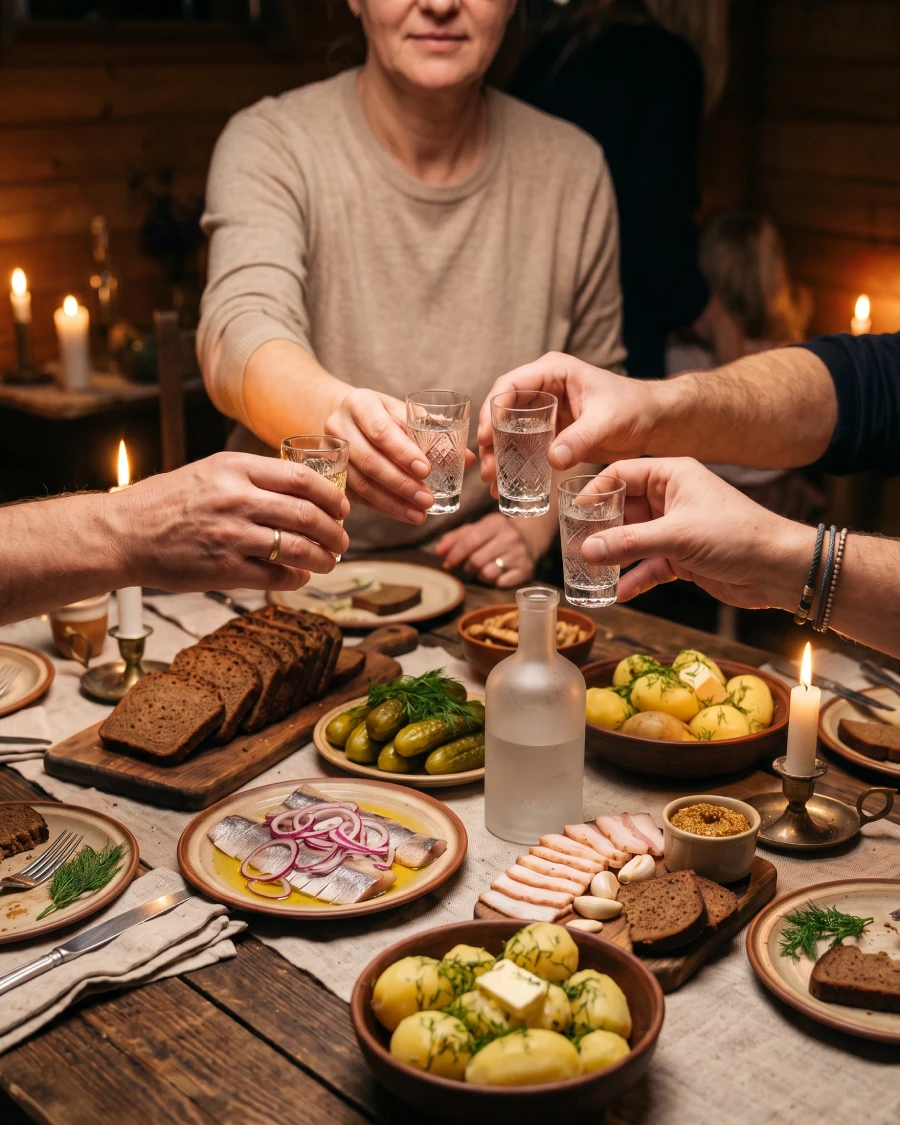
You do not pick up a glass of vodka in Slavic tradition and simply drink it. There must be a reason. A toast.
This is not a formality. It is the foundation of the entire ritual. Drinking without a toast — just lifting the glass because you feel like it — is considered cheap, even slightly disrespectful. The toast is the reason the glasses are filled. The drink is the punctuation at the end of the sentence, not the sentence itself.
At a traditional Slavic table, the toasts follow a loose but understood order. The first is typically to the gathering itself — to the fact that everyone is here, together, in this room. Za vstrechu. To our meeting. The second often follows quickly — there is even a saying that captures this: mezhdu pervoy i vtoroy, pereriv ne bolshoy — between the first and the second, there is not a long pause. The third is traditionally to love.
After those first three, the toasts become more personal. To health. To absent friends. To the hosts who made the table. To the year ahead. At Ukrainian gatherings, you will often hear budmo — a word that translates loosely as let us be, an acknowledgment of the people around you and the simple fact of being alive and present together.
At larger celebrations — weddings, namedays, major holidays — there is often a tamada: a designated toastmaster. Someone charismatic, someone who knows proverbs and stories, someone who can keep a table of thirty people laughing and moved in equal measure. The tamada does not just say cheers. They tell a story. They build to the drink the way a comedian builds to a punchline.
The vodka is almost secondary. The words come first.
The second rule: you never drink on an empty stomach
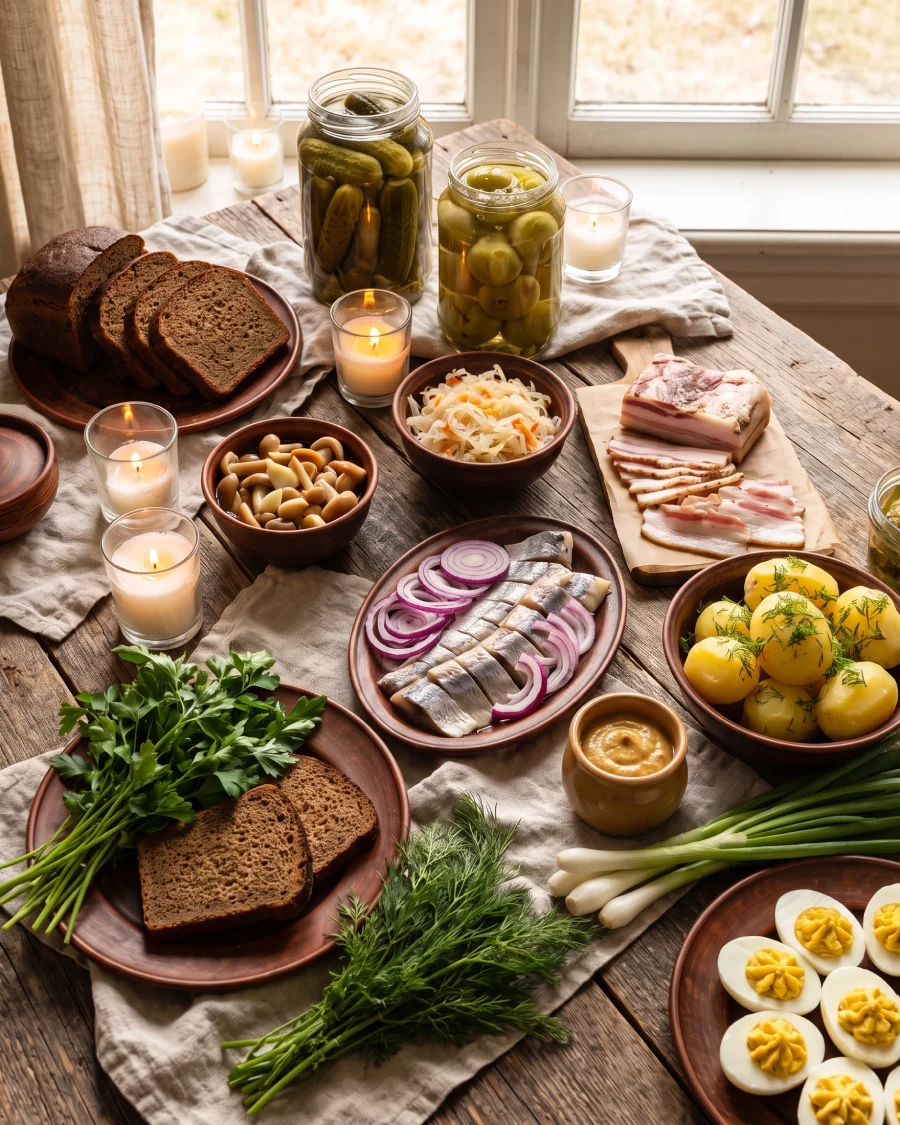
The word zakuski comes from the Ukrainian verb zakusiti — to take a bite, to bite after. The suffix tells you the sequence: drink, then eat. Immediately. The bite follows the glass.
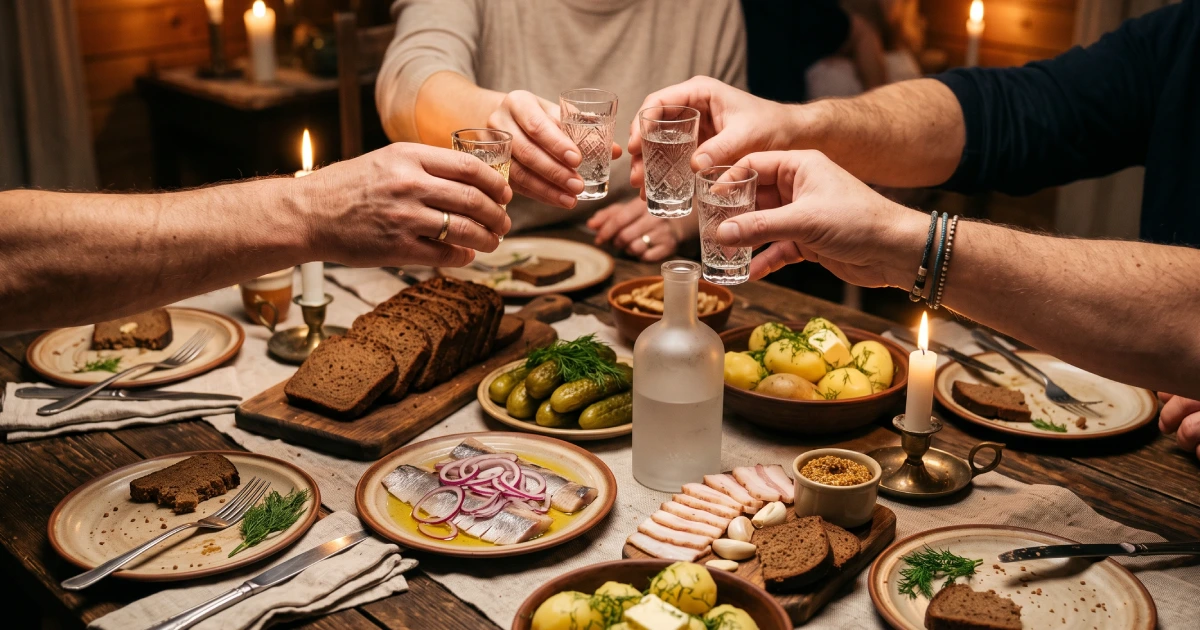
Zakuski are not bar snacks. They are not an afterthought. They are the architecture of the table, and at a properly set Slavic table they arrive before anything else — a spread of cold dishes that will remain through the entire drinking portion of the evening. Salty or pickled items are particularly favored for their ability to counter the burn of alcohol through contrasting flavors, with the rule that one should never drink vodka without accompanying food.
The classics are simple and purposeful. Dark rye bread — dense, slightly sour, perfect for absorbing alcohol. Pickled cucumbers, crisp and briny, a direct counterpoint to the clean heat of vodka. Salted herring, sometimes with onion and oil. Salo — cured pork fat — spread on bread. A small dish of mustard. Boiled potatoes with dill. Hard-boiled eggs.
None of it is elaborate. All of it is deliberate. Fat and salt slow alcohol absorption, pickle brine settles the stomach, bread provides ballast. The table is built to support an evening of drinking without the evening becoming something you regret.
Vodka isn't about getting drunk — it's an opportunity to toast to life. You can't just drink and toss it back without toasting. You give thanks.
The third rule: the glass is cold and the pour is generous

Traditional Slavic vodka is served from a bottle that has been in the freezer. Not chilled — frozen. The liquid becomes viscous, slightly syrupy, with a texture that has nothing in common with room-temperature vodka. At near-freezing temperatures, the harshness disappears and what remains is clean, smooth, and almost sweet.
The glass is small. Fifty milliliters is traditional — a single clean pour. You drink it in one motion, not sipping. The sip prolongs the alcohol contact in the throat; the clean drink gets it over with and lets the zakuski do their work immediately after.
Who pours matters. At a traditional table, you do not pour your own glass. Someone pours for you. Pouring for yourself — especially the first pour — reads as impatient, or worse, as a signal that you cannot be trusted to stop when you should. The host pours. The eldest pours. The person being honored pours for others. The bottle moves around the table and the empty bottle is placed on the floor, never back on the table — a superstition whose exact origin nobody agrees on, but everybody follows.
Why Na zdorovye is not actually what anyone says
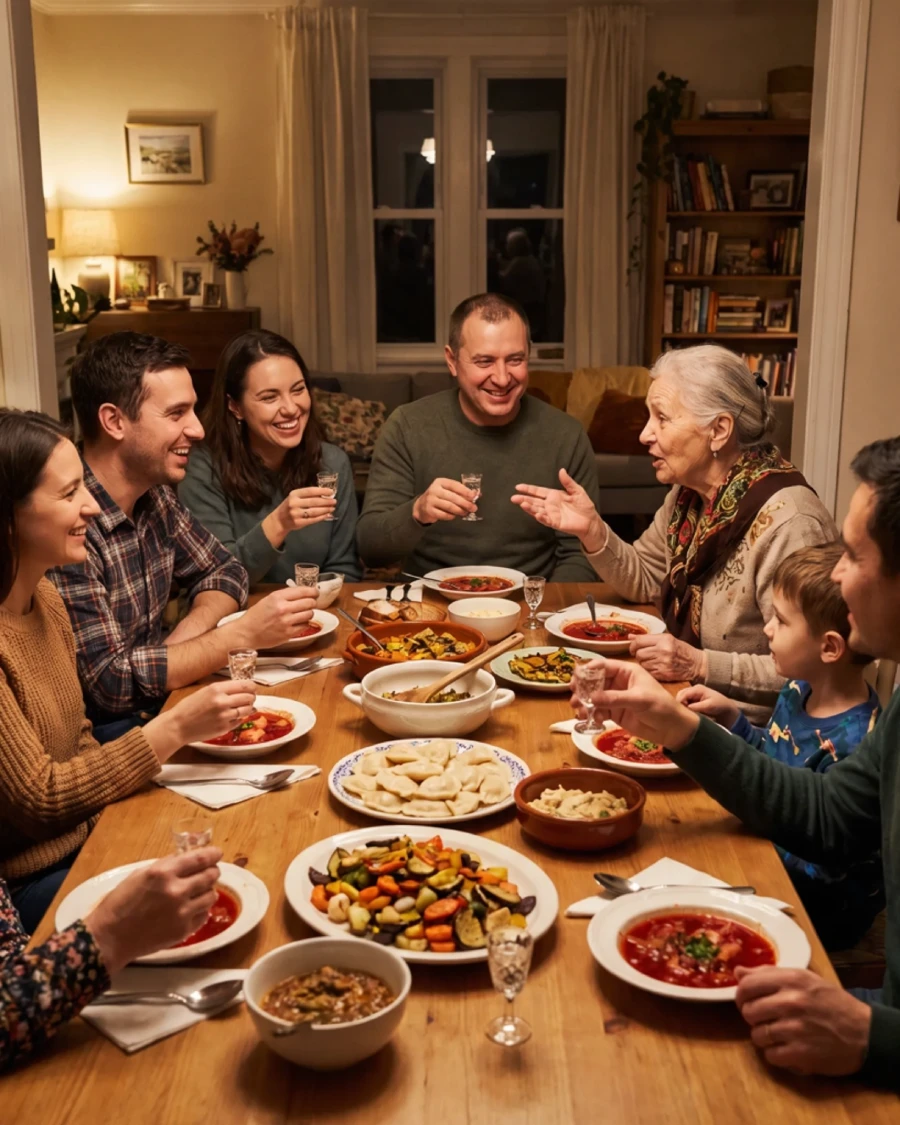
A quick correction that Slavic people will appreciate: the toast na zdorovye — to health — is widely believed in the West to be the universal Slavic drinking toast. It is not. No one in Russia says it, according to Russian bartenders. The phrase is actually more common in Polish, and the equivalent Ukrainian toast is bud'mo or za zdorov'ya.
What you will actually hear around a Ukrainian table depends on the moment. Budmo for celebration and togetherness. Za vas — to you — when honoring a specific person. Za zdorov'ya when health is the genuine sentiment. And increasingly, among younger generations and in diaspora communities, a mix of whatever languages happen to be at the table — because the form matters less than the intention behind it.
The toast is sincere or it is nothing.
The pace of the evening
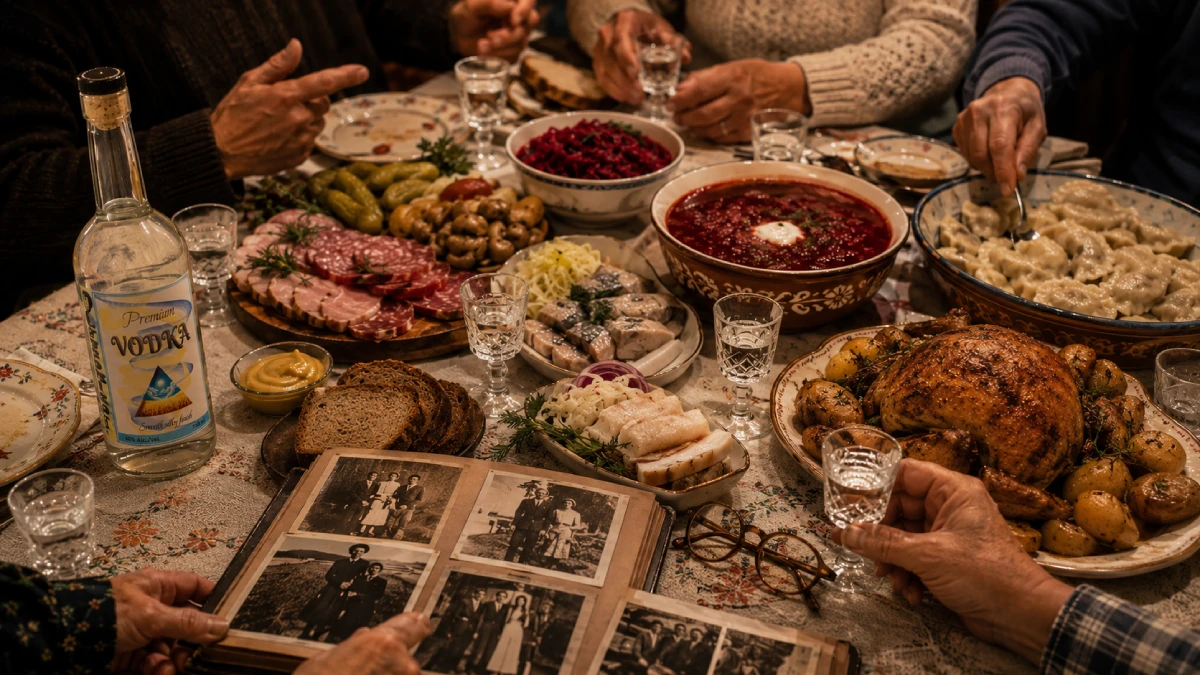
A Slavic drinking table is not a race. The toasts happen at the beginning of the meal, in relatively quick succession during the zakuski course. A lot of the toasting happens at the front end of a meal, and there is absolutely never drinking without food. By the time you get to the mains or the hot food, you are usually done toasting in rapid succession — now people are just eating to sop up the alcohol.
Once the main food arrives, the formal toasting slows. The conversation deepens. Someone tells a story. Someone argues about something. Someone's grandmother produces a dish that nobody expected and everyone crowds around. The vodka does not disappear — but it is no longer the center of attention. It has done its work of opening the table, loosening the formality, and giving everyone a shared experience to move through together.
This is the tradition that is hardest to explain to someone who has not experienced it: the drinking is a vehicle, not a destination. You drink together in order to arrive at an evening you would not have reached as quickly without it. The toasts are the ceremony that gives the gathering structure. The zakuski are what allow you to be present for the whole of it.
The tradition today
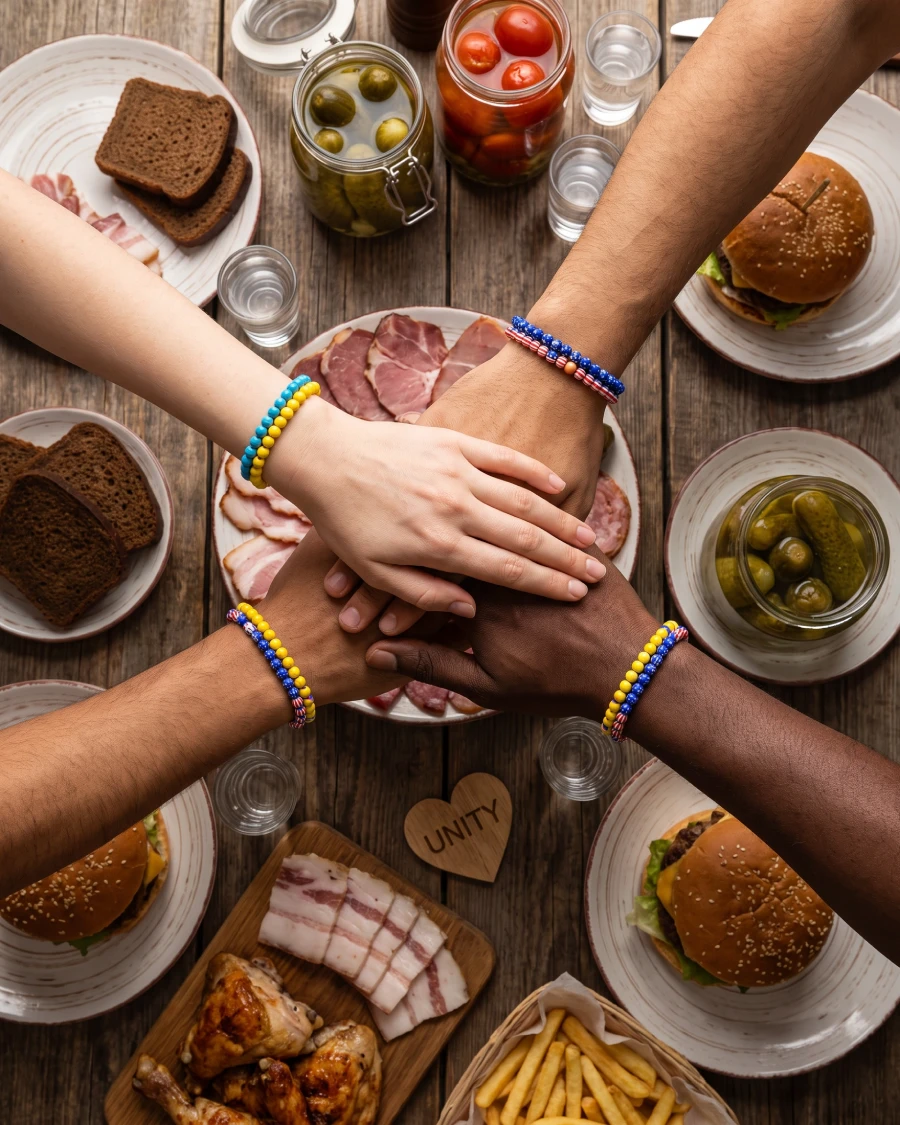
For Ukrainians and Slavic communities outside their home countries — in New Jersey, in Chicago, in Toronto, in London — the tradition travels. You find it at kitchen tables and at diaspora celebrations and at the kind of dinner where someone produces a bottle from a bag at the end of the night because the evening is not finished yet.
The specific dishes change. The language of the toasts shifts between generations. But the underlying structure remains: there is always a reason to drink, there is always food on the table, and the first glass waits until everyone has one.
At LYUBOMIROFF, we produce our vodka as a base for exactly this kind of evening — clean, smooth when served cold, neutral enough to let the table be the center of attention rather than the spirit in the glass. Our Horseradish Liqueur is also a natural part of a traditional zakuski spread — served cold alongside pickles and rye bread, it connects directly to the hrenovuha tradition that has been part of Slavic tables for centuries.
Preserving these traditions is part of how we think about vodka. While every family has its own customs, the principles remain remarkably consistent: gather together, raise a meaningful toast, and never let the bottle become more important than the people around the table.
A zakuski table to try at home

You do not need a special occasion. You need a bottle in the freezer, a few things from a deli, and people worth toasting. A simple spread:
- Dark rye bread, sliced thin
- Pickled cucumbers or cornichons
- Smoked fish — salmon, herring, or mackerel
- A good salted butter
- Hard-boiled eggs, halved, with a little mustard
- Salo (Lard)
- Sliced salami or cured meat
- Fresh dill, scattered over everything
Put it on the table before anyone sits down. Have the bottle ready and cold. Think of something worth saying before you pour.
Traditional vodka etiquette
- Wait until everyone has been served.
- Raise your glass only after the toast.
- Make eye contact with the person giving the toast.
- Drink together.
- Take a bite immediately afterward.
- Never rush the next round.
Good vodka is cold.
Great vodka is shared.
The toast is what people remember.
Budmo.